
Mission Groups
Perdition's Daughter
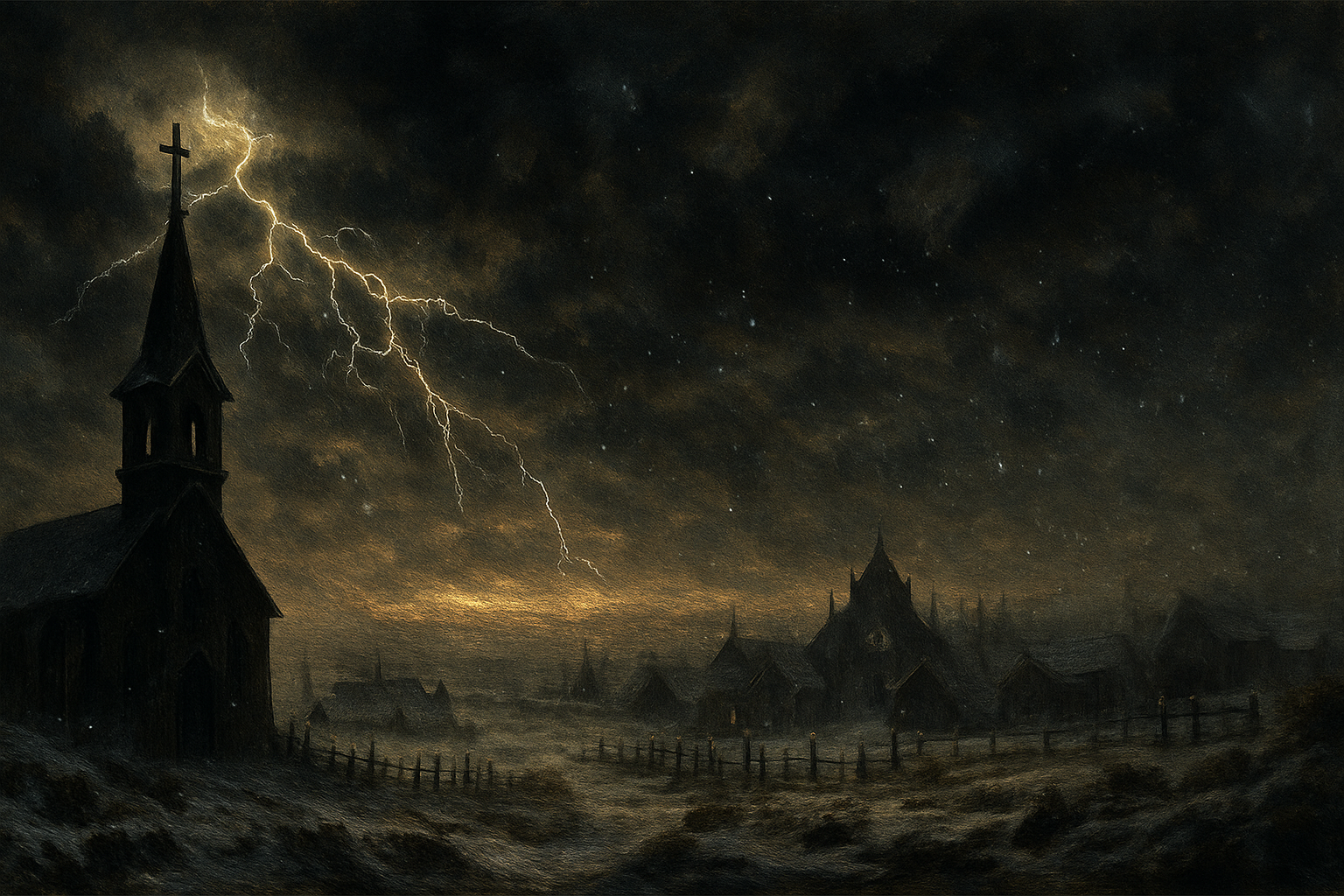
ISSUE ONE: PERDITION'S DAUGHTER
Winter 1877 - The Disputed Lands
The Formation of the Troubleshooters
The world changed after the Reckoning of 1863. The Weird West grew stranger with each passing year, and conventional solutions no longer sufficed for unconventional problems. By the fall of 1877, Colonel Augustus "Gus" Brennan—wealthy Confederate industrialist and part-owner of the Black River Railroad—found himself facing a series of incidents that defied ordinary explanation.
Sabotage at his depots. Wagons vanishing without trace. Competitors who seemed to know his every move. And things in the darkness that his night guards refused to speak about by day. The law couldn't help. The Pinkertons asked too many questions. Brennan needed something different—a discrete team capable of handling problems that went beyond the natural world.
He sent a telegram from Memphis, tracking down an old comrade from the War: J.R. McEntyre, now a Texas Ranger. The message was simple: "I need your help with unusual business. Come to Memphis. Will explain everything."
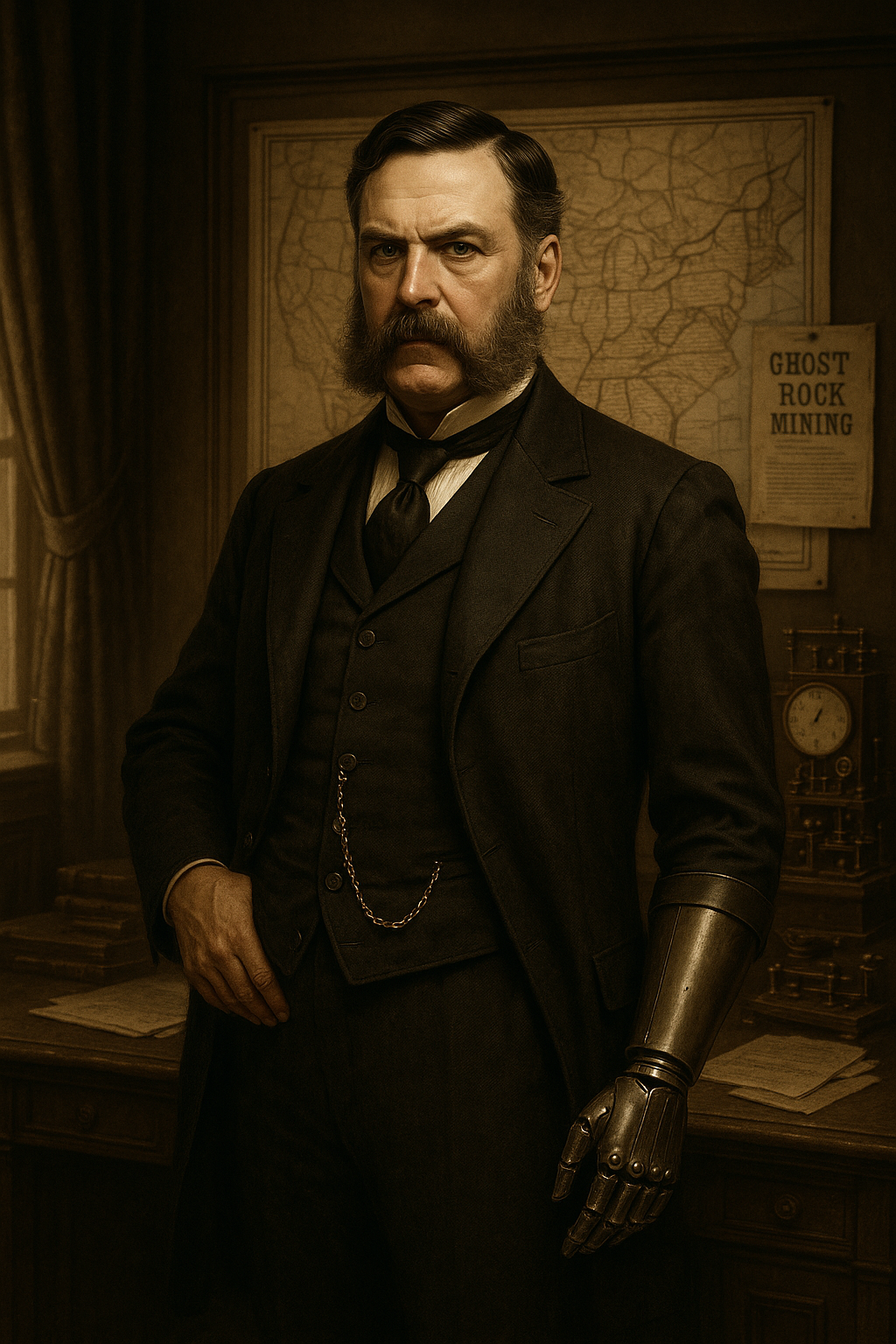
What Gus offered J.R. was straightforward: assemble a team of specialists who could handle the strange and the dangerous. People who'd seen the weird and survived. People who could be trusted. People who understood that sometimes the threats to good business weren't found in ledgers or board rooms, but in the shadows where things that shouldn't exist waited with malevolent patience.
J.R. took a leave of absence from the Texas Rangers and spent the next two months recruiting. By late November 1877, the "Troubleshooters" were assembled—a small team of specialists based in Dodge City, ready to handle Colonel Brennan's unusual business problems.
They had barely proven themselves when a new problem arrived by telegram...
A Father's Desperation
In early December 1877, a telegram arrives at Colonel Brennan's office in Memphis from an associate in Denver: Irving Backlund, president of Backlund Mining Inc., one of the largest mining operations in Colorado Territory. The message is urgent and cryptic—Backlund needs help with a "delicate family matter" and is willing to pay well.
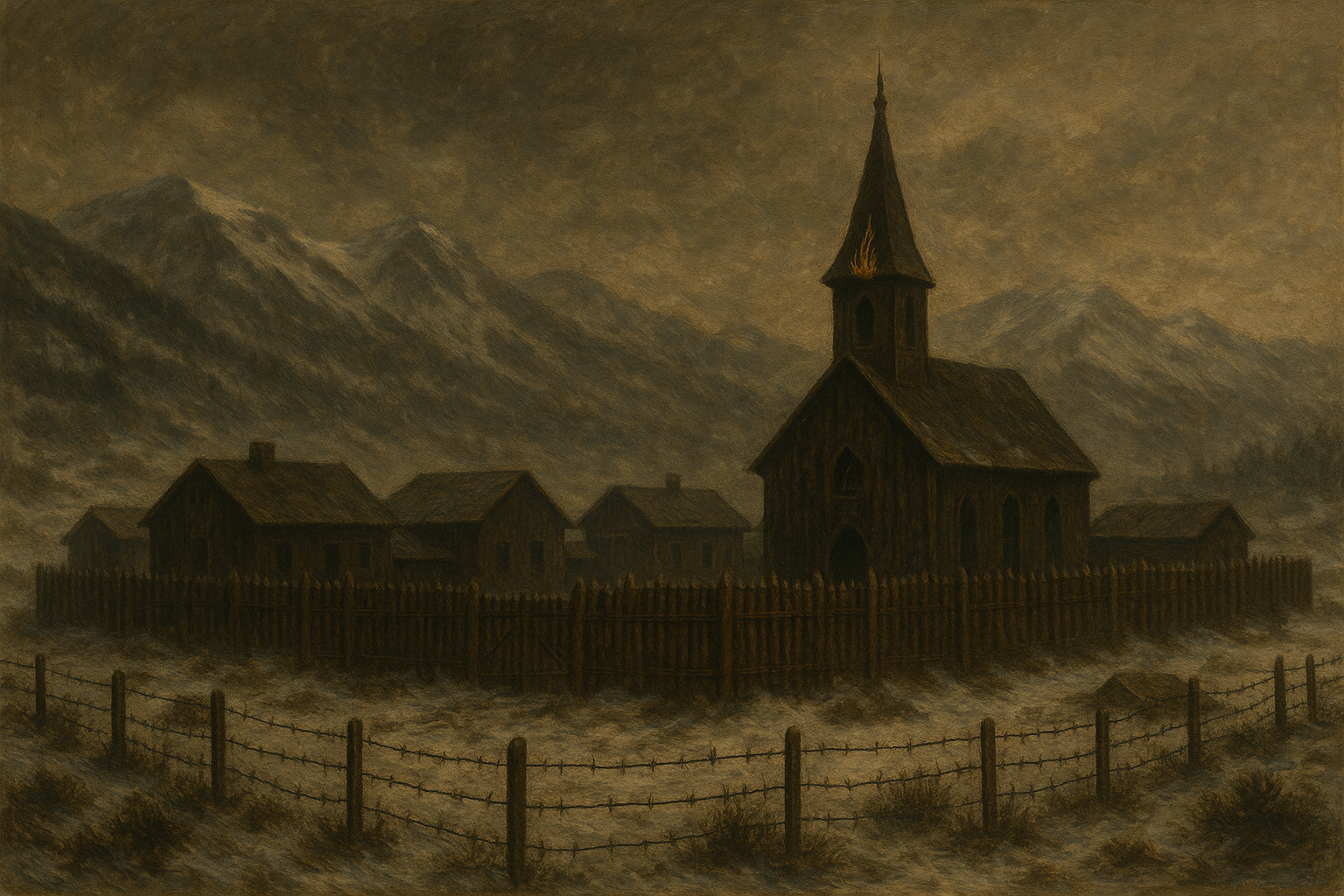
Backlund's son Christopher vanished nearly two years ago after his mother's tragic death in a carriage accident. The young man, devastated by grief, simply disappeared into the vast territories of the West. It took Irving Backlund months of searching and considerable expense to discover that Christopher had joined a secretive religious community called the Church of the Holy Flame.
The Church, led by the enigmatic Lady Cynthia Carstairs, preaches isolation from the material world and operates from a fortified compound near the small Colorado town of Derry's Ford. Christopher has cut all ties with his father, donated his considerable inheritance to the Church, and refuses all contact. The one letter Irving received blamed him for Anna Backlund's death and spoke of "repentance" and "saving Mother's soul."
With Christmas approaching, Irving Backlund wants his son home. The law won't intervene—Christopher joined willingly, and the Church has broken no laws. But Backlund is convinced his son has fallen under the influence of something sinister, and he's willing to pay whatever it takes to get Christopher back—preferably before Christmas.
The Journey to Denver
Colonel Brennan sees an opportunity to forge an alliance with one of Denver's most powerful industrialists. He dispatches his newly-formed Troubleshooters west to Colorado with orders to investigate the Church of the Holy Flame and bring Christopher Backlund home—by Christmas if possible.
The journey from Dodge City to Denver takes four days through increasingly wintry terrain. The Troubleshooters have time to bond, to plan, and to wonder what they're riding into. Rumor and speculation about the Church of the Holy Flame abound, but solid facts are scarce. Most troubling are the whispers about Lady Carstairs herself—beautiful, charismatic, and somehow... ageless.
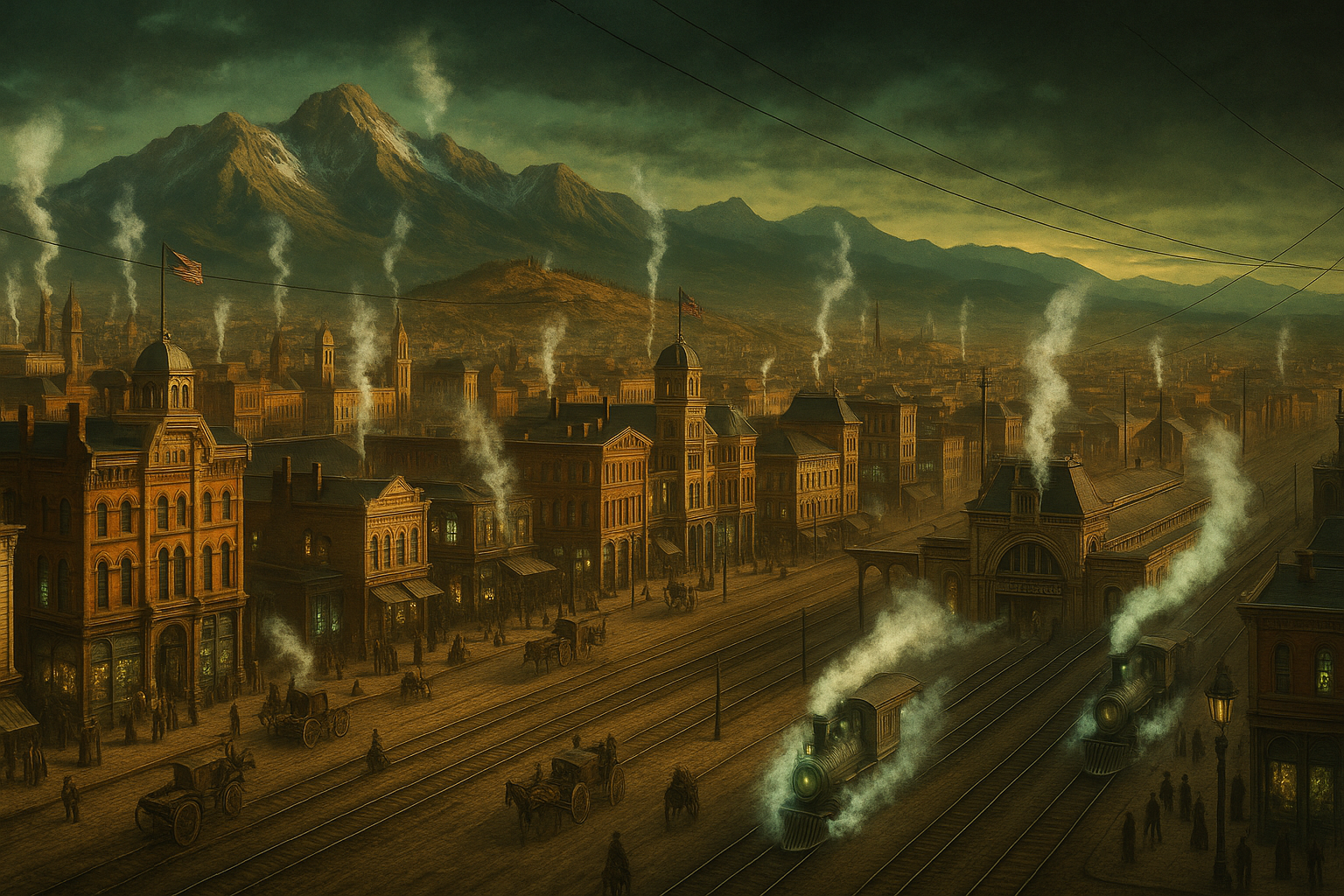
Denver awaits—a booming city of thirty-five thousand souls, where ghost rock money flows like water and fortunes are made and lost on the turn of a card. The Troubleshooters arrive in mid-December to find a city preparing for Christmas, unaware of the horror brewing in the nearby mountains.
Their meeting with Irving Backlund reveals the depth of a father's desperation. This portly, prosperous gentleman—a man who commands mining operations across Colorado—is reduced to pleading with strangers to save his only remaining family. His office bears the weight of his grief: a shrouded portrait of his dead wife Anna, and beside it, a portrait of the son he fears he's losing to madness or worse.
Into the Mountains
After a day in Denver gathering supplies and information, the Troubleshooters ride southwest toward Derry's Ford—a small town of barely a hundred souls nestled in the shadow of the Rockies. Three miles beyond the town lies the Church compound: a fortified settlement surrounded by wooden palisades, where seventy-five souls live in devotion to Lady Carstairs and her teachings.
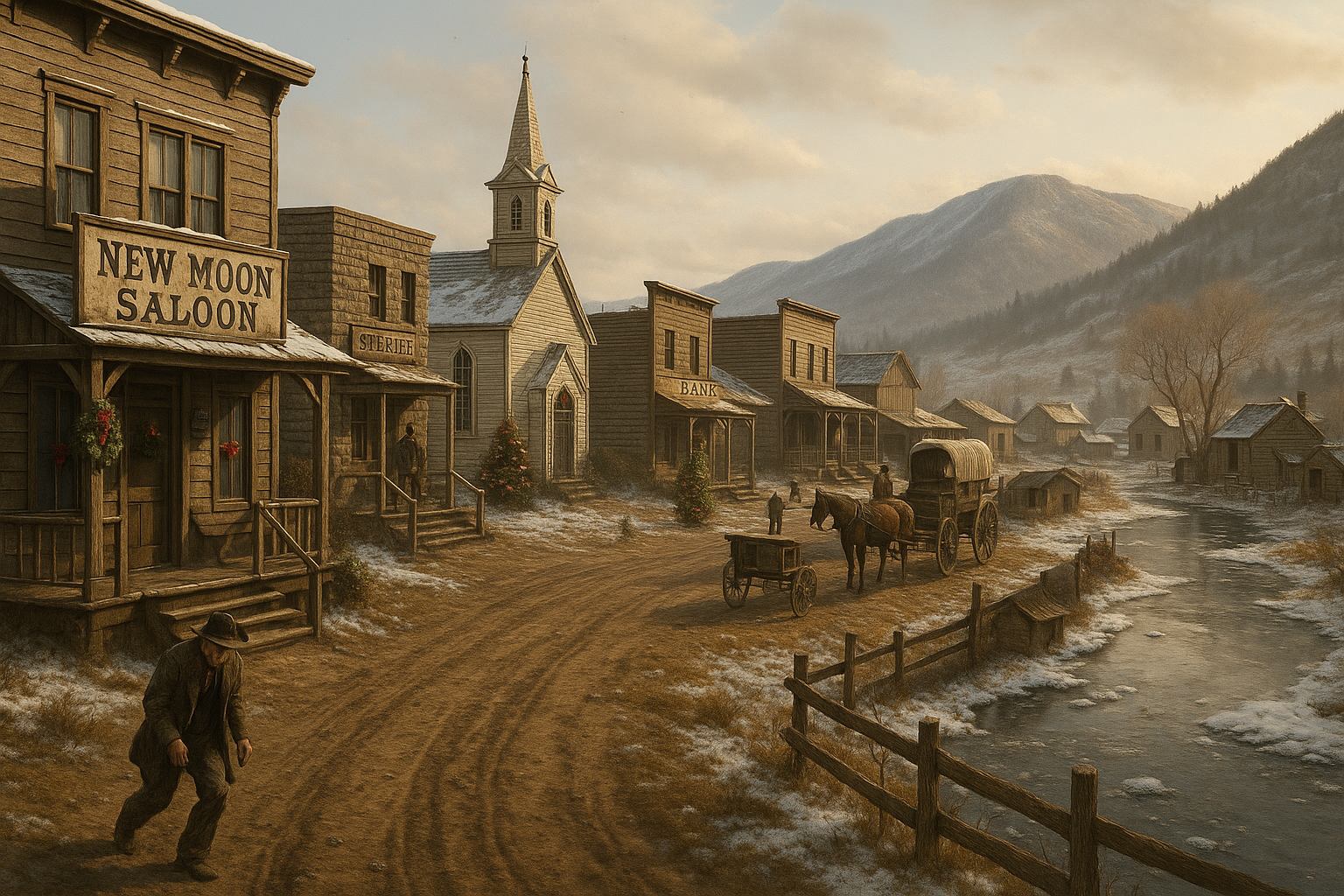
What begins as a simple extraction job soon reveals something far more sinister. In the New Moon Saloon, they find Reverend Bernard Owlsley—once a respected man of God, now the town drunk. His fall from grace coincides suspiciously with the Church's arrival in the area. If the Troubleshooters can sober him up and earn his trust, Owlsley tells a tale that chills the blood.
Fifty years ago, in 1827, a young Bernard Owlsley witnessed an atrocity in these very mountains. A charismatic woman calling herself "Emily Wright" led a religious community into the wilderness for a "sacred ceremony." What happened that night drove Owlsley to the priesthood and haunted his dreams for half a century. His brother was among those who died.
Now "Emily Wright" has returned, calling herself Lady Cynthia Carstairs. She hasn't aged a day in fifty years. And Christmas Eve, 1877, marks exactly five decades since her last feeding.
Ancient Evil
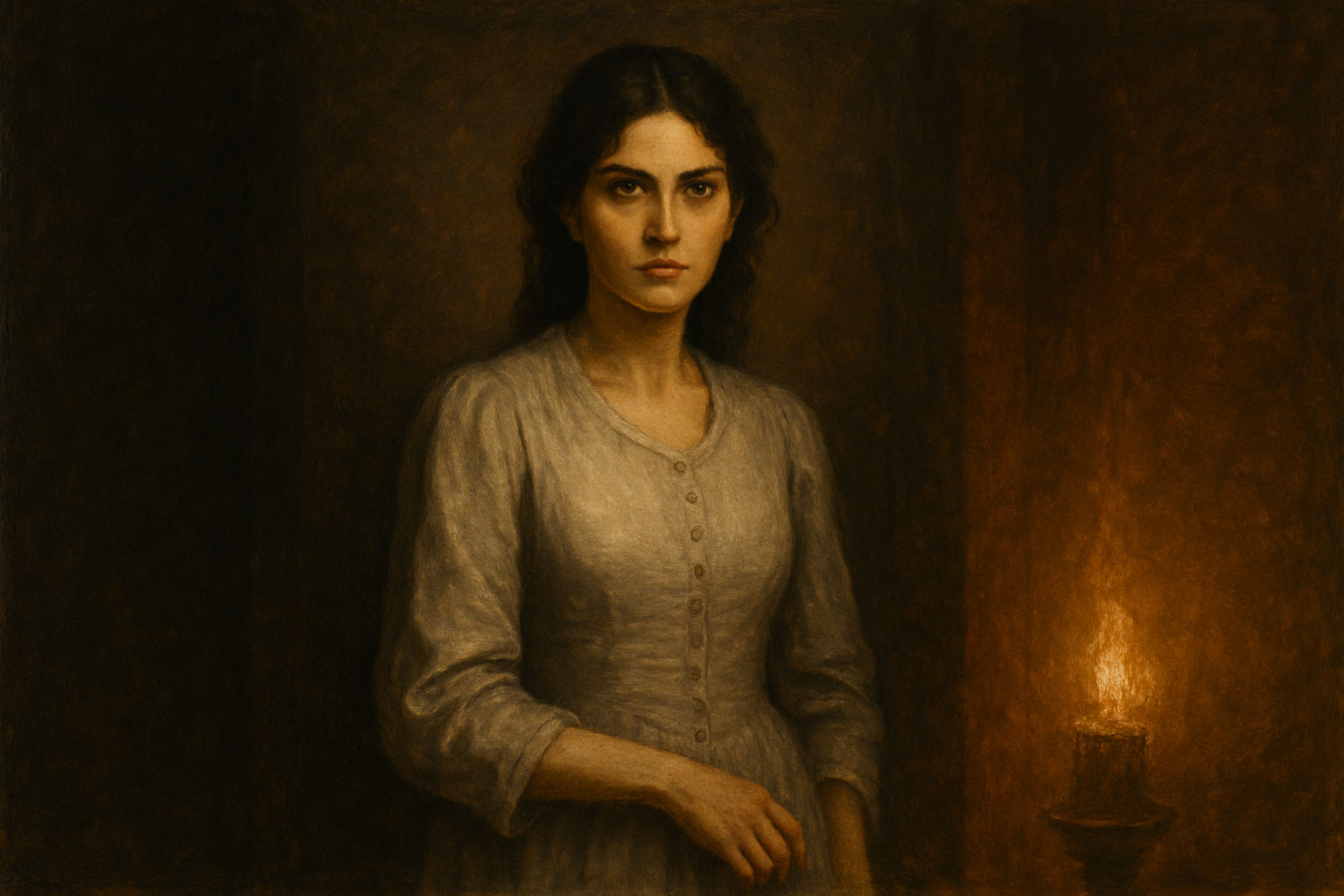
Lady Carstairs is no mere con artist. She's an ancient entity—possibly thousands of years old—sustained by a horrific ritual performed every fifty years. Her life force is bound to a mystical flame that grants her immortality as long as it burns. Her followers aren't just deluded—they're marked for sacrifice, bound to her will by magic and manipulation.
She preys upon the grieving and the lost, offering them purpose and peace. She found Christopher Backlund at his lowest point, twisted his grief into devotion, and bound him to her with chains stronger than iron. He's not just a member of her Church—he's in love with her, or believes he is. She encourages this devotion, knowing that his terror when she finally consumes his soul will be all the sweeter for it.
Standing between the Troubleshooters and the truth is Edgar DuChamp, a deadly Eastern gunslinger who serves as Carstairs' enforcer. Fast with his Buntline revolver and utterly devoted to his mistress, DuChamp handles the Church's worldly affairs with cold efficiency. He knows Carstairs is supernatural—she's promised to share the secret of her longevity with him. He suspects she's lying, but hope makes fools of desperate men.
The Pilgrimage
Time is running out. The Troubleshooters' investigation reveals that Carstairs is preparing to lead her followers on a "pilgrimage" into the mountains—to a place called Black Peak, where an ancient stone altar waits in a natural bowl formation. The same place where "Emily Wright" performed her massacre in 1827.
There's one last night of peace in Derry's Ford before the final confrontation. The Troubleshooters gather at the New Moon Saloon, checking weapons, sharing stories, and steeling themselves for what's to come. If they've managed to restore Reverend Owlsley's faith, he joins them—a man of God riding to face an ancient evil, seeking redemption for fifty years of running.
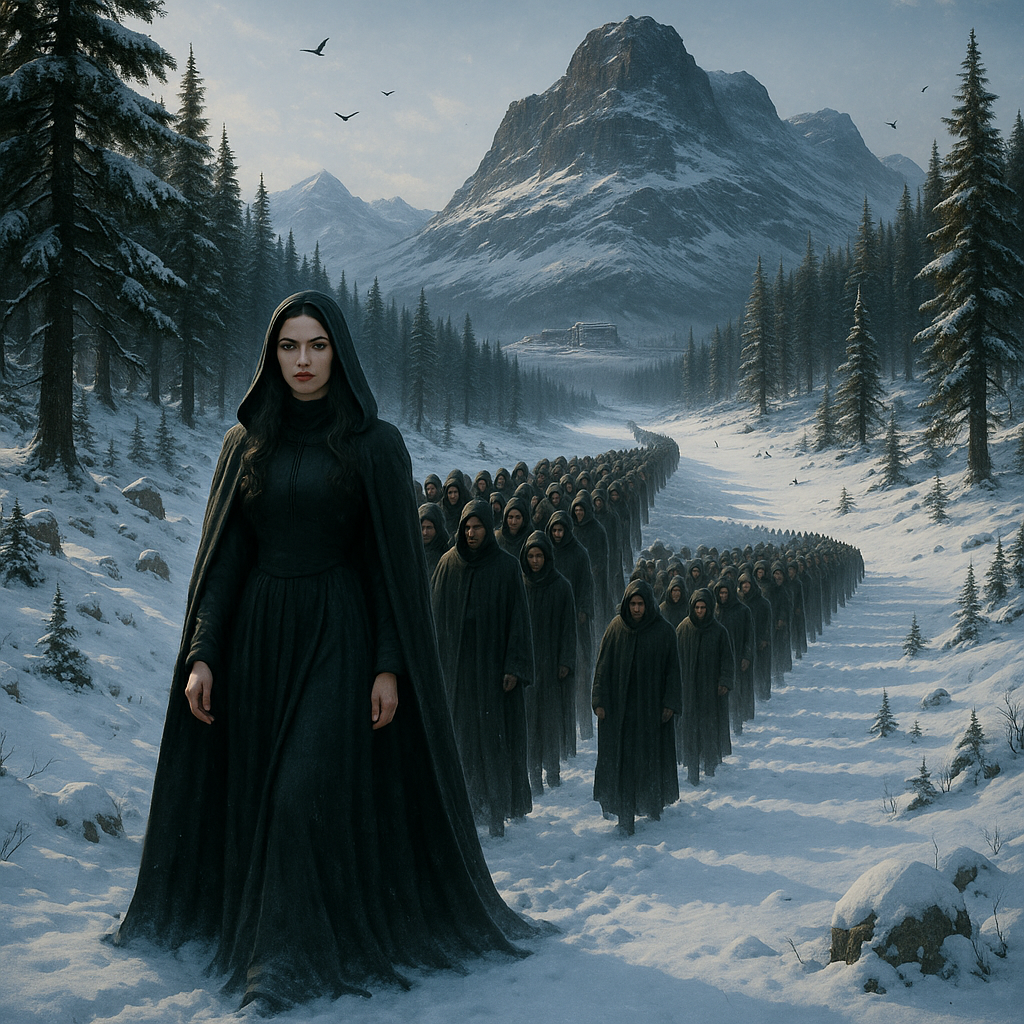
Christmas Eve dawns cold and clear. The Church departs for the mountains, seventy-five souls walking toward their doom. The Troubleshooters ride in pursuit, knowing they're outnumbered more than ten to one, knowing that one misstep could mean disaster. But also knowing that if they fail, Christmas Day will dawn on a massacre.
The Altar of Blood
The pursuit through the snow-covered mountains is grueling. Fifteen miles of increasingly rugged terrain, with the temperature dropping and the wind picking up. Carstairs may control the weather itself—some say a blizzard follows in her wake, either to cover her passage or to slow pursuit.
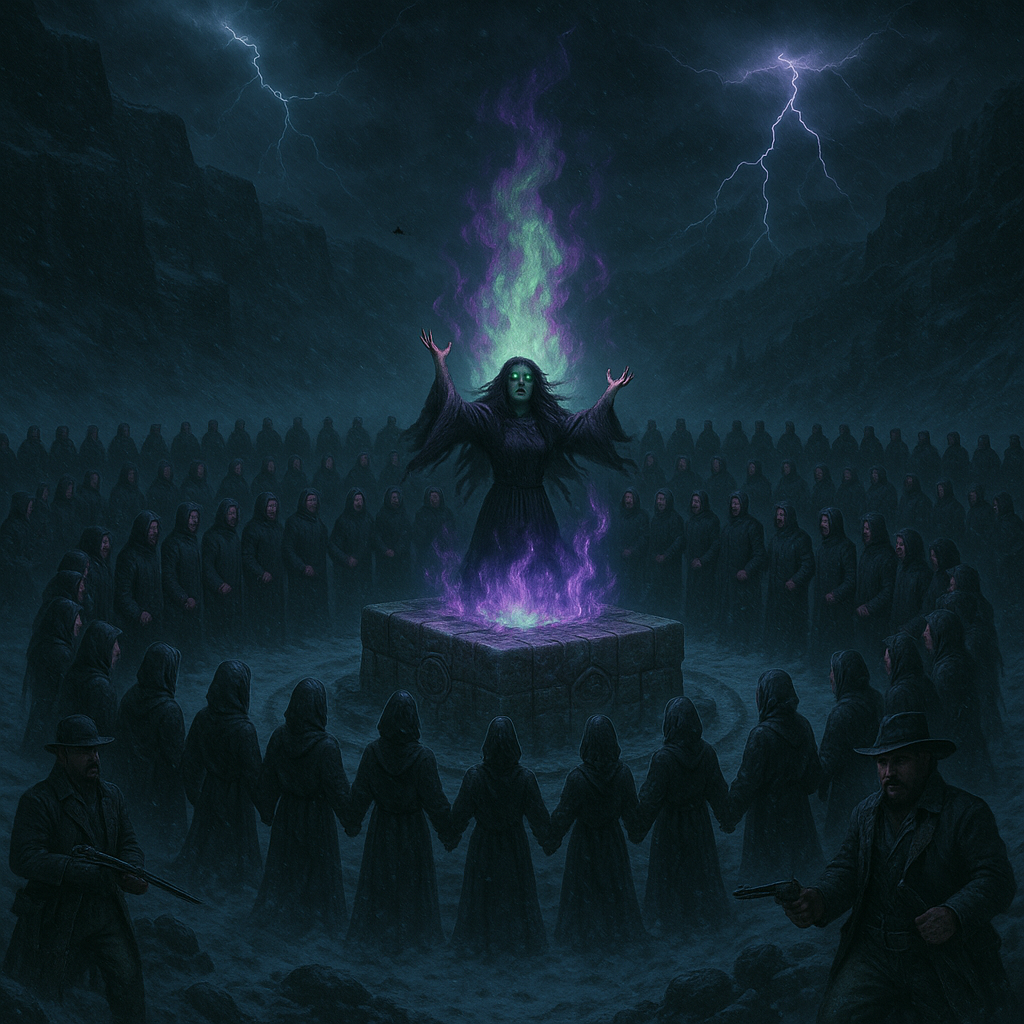
Black Peak is a place of ancient power, a natural amphitheater of stone with a weathered altar at its heart. Here, Carstairs prepares her ritual. Her followers stand in concentric circles, holding hands, chanting prayers that aren't quite Christian and aren't quite anything else. At the center, a bonfire burns—the soulflame that sustains her immortal existence.
The Troubleshooters arrive to find seventy-five people in a trance-like state, bound by magic they can barely comprehend. DuChamp and his armed guards patrol the perimeter. Carstairs stands at the altar, beautiful and terrible, preparing to trigger the ritual that will drive her followers into murderous frenzy—making them kill each other while she feeds on their dying souls.
What happens next will echo through the rest of the campaign. Do they fight their way in? Sneak close and strike at the soulflame? Try to break the binding on the cultists? Appeal to Christopher's buried humanity? Trigger an avalanche to bury the site? Every choice has consequences, and time is running out.
Christmas Morning
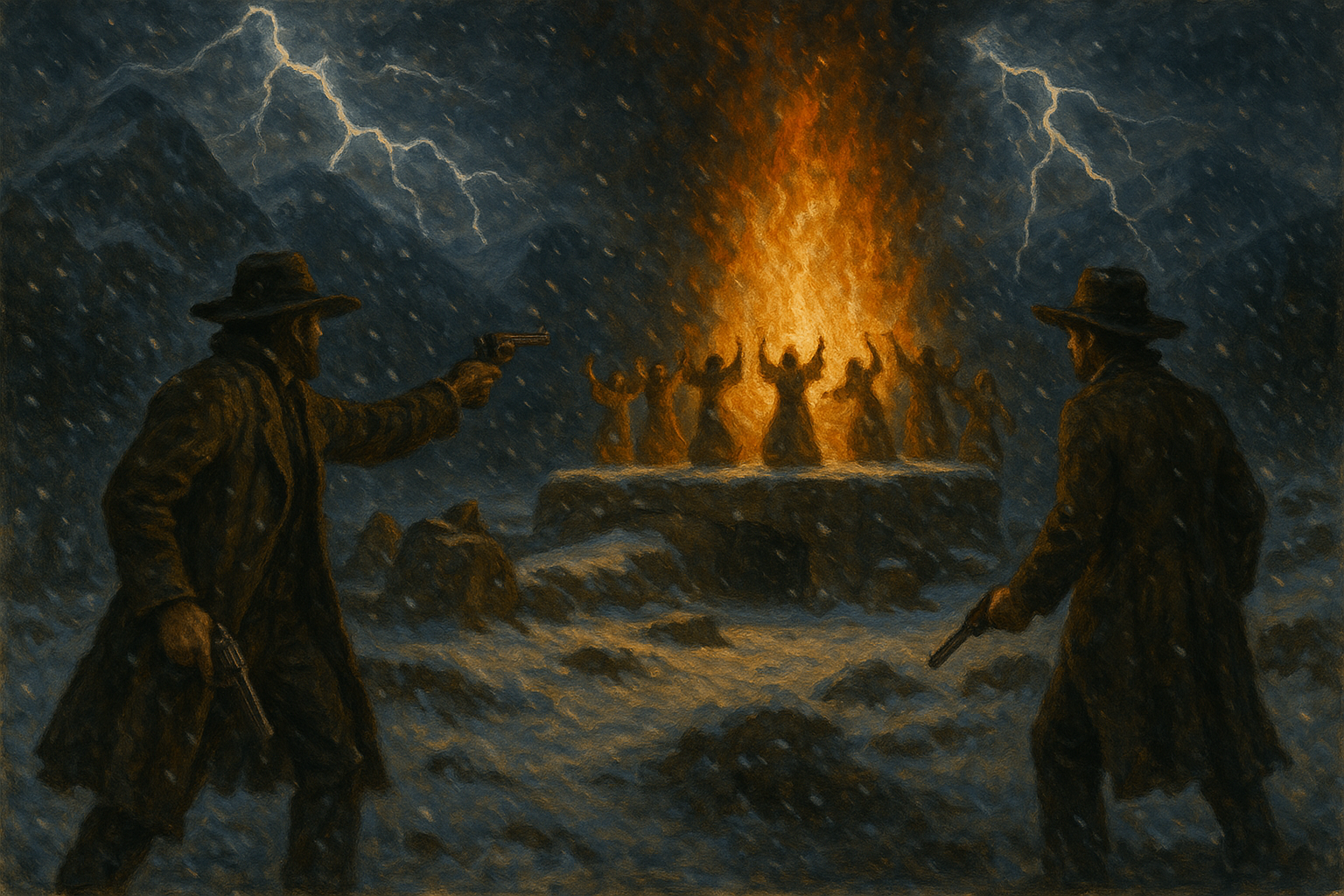
The confrontation at Black Peak will determine the fate of seventy-five souls—and perhaps the Troubleshooters themselves. Success could mean liberation and redemption. Failure could mean a Christmas Day massacre and an ancient evil continuing her reign for another fifty years.
Whatever happens on that mountaintop, it will echo through the rest of the campaign. The choices made at Black Peak will define who the Troubleshooters are and what they're capable of facing.
In the Weird West, there are no guaranteed victories. There's only the choice to stand against the darkness, even when the odds seem impossible.
Issue Structure
Perdition's Daughter unfolds across seven Stories, alternating between mission-focused action and character-driven downtime:
Story One: "Assembling the Troubleshooters" (September-November 1877)
Colonel Brennan faces supernatural problems and decides he needs a specialized team. John Ross McEntyre recruits the Troubleshooters, who prove themselves on their first job together in Dodge City.
Story Two: "The Summons" (December 14-19, 1877)
The Backlund telegram arrives. The Troubleshooters travel from Dodge City to Denver, learning about the Church of the Holy Flame along the way.
Story Three: "Mile High Interlude" (December 19-20, 1877) [Downtime]
Meeting with Irving Backlund, shopping for cold weather gear, researching the Church, and preparing for the journey to Derry's Ford.
Story Four: "The Church of the Holy Flame" (December 20-22, 1877)
Arriving in Derry's Ford, investigating the Church compound, meeting Reverend Owlsley, discovering Carstairs' supernatural nature, and watching the Church depart for their "pilgrimage."
Story Five: "The Calm Before the Storm" (December 22-23, 1877) [Downtime]
Final preparation in Derry's Ford, checking weapons, last conversations, redeeming Reverend Owlsley, and steeling nerves for the confrontation ahead.
Story Six: "The Altar of Blood" (December 24, 1877)
Christmas Eve pursuit to Black Peak, the final battle with Lady Carstairs and Edgar DuChamp, saving the cultists, and the long descent back to civilization.
Story Seven: "Homecoming" (December 25-January 1, 1878) [Downtime]
Christmas celebration in Derry's Ford, return to Denver with Christopher, reunion with Irving Backlund, and return to Dodge City as the New Year begins.
Key Characters
Colonel Augustus "Gus" Brennan: Confederate industrialist and owner of the Black River Railroad. Ambitious, pragmatic, and willing to use unconventional methods to solve unconventional problems. He sees the Troubleshooters as both a necessary tool and a profitable investment.
John Ross McEntyre: Former Confederate officer, current Texas Ranger, and Gus's old comrade from the War. Loyal, competent, and trusted with recruiting the Troubleshooters. He serves as the team's de facto leader and Brennan's direct contact.
Irving Backlund: Wealthy Denver industrialist and desperate father. President of Backlund Mining Inc., he's willing to pay any price to get his son back before Christmas—or at least to know Christopher joined the Church of his own free will.
Christopher Backlund: A young man broken by grief who found solace in Carstairs' teachings. Heir to a mining fortune, he's given everything to the Church—his money, his freedom, and soon, if nothing changes, his life as well.
Lady Cynthia Carstairs: The beautiful, charismatic leader of the Church of the Holy Flame. Behind her warm smile and soothing words lies an ancient entity that has walked the earth for thousands of years, sustained by the souls of her devoted followers.
Edgar DuChamp: A cultured Eastern gunslinger who serves as Carstairs' protector and right hand. Fast with a Buntline revolver and utterly devoted to his mistress, DuChamp handles the Church's worldly affairs with cold efficiency. He knows she's supernatural and hopes to learn her secrets before she inevitably betrays him.
Reverend Bernard Owlsley: The town drunk of Derry's Ford, Owlsley was once a respected man of God. Fifty years ago, he witnessed Carstairs' previous massacre and barely escaped with his life. Her return has driven him to the bottle, but deep inside, his faith still burns—waiting to be rekindled.
Sheriff Leland Turner: Former Union soldier who keeps the peace in Derry's Ford. He doesn't like the Church, but they haven't broken any laws. He'll defend the law even if it protects the Church, but might help the Troubleshooters if they can prove the Church is genuinely dangerous.
"The Holy Flame purifies us, my children. Through it, we shall be cleansed of sin and made whole. Trust in the flame, and it shall set you free."
— Lady Cynthia Carstairs
"I saw her fifty years ago, and she hasn't changed. Not one bit. That woman—that thing—she's gonna do it again. God help us all, she's gonna do it again."
— Reverend Bernard Owlsley
Themes
Perdition's Daughter explores several interwoven themes that give the story depth beyond simple action and horror:
Grief and Manipulation: How loss makes us vulnerable to those who promise to take away our pain. Carstairs preys specifically on the grieving, and every member of her Church joined because they were broken by loss.
Faith vs. Fanaticism: The difference between genuine belief that empowers and false faith that enslaves. Owlsley's real faith was broken but can be restored; the cultists' false faith must be shattered to save them.
The Price of Immortality: What are we willing to sacrifice to live forever? Carstairs murders dozens every fifty years; DuChamp is willing to help her do it for the promise of eternal life.
Redemption: No fall is too great if someone is willing to climb back up. Owlsley can reclaim his faith, Christopher can break free from manipulation, and the cultists can rebuild their lives.
Christmas: Hope and Horror: The juxtaposition of a sacred holiday with ancient evil. Christmas should be a time of peace; instead it becomes the night of terror. But if the Troubleshooters succeed, it becomes a day of true deliverance.
Family Bonds: Irving's love for Christopher drives the whole mission. The cultists severed their family ties at Carstairs' urging. Healing requires reconnection with those we've lost or pushed away.
An Issue of Many Parts
This is more than a simple rescue mission or a straightforward battle against evil. Perdition's Daughter is the origin story of the Troubleshooters themselves—how they came together, why they work for Colonel Brennan, and what they're capable of when faced with the truly horrible.
It's a father's desperate quest to save his son. It's a broken minister finding his faith again. It's seventy-five people who joined a cult seeking peace, only to find themselves marked for death. It's an ancient evil that's committed the same crime for thousands of years, finally facing those who might stop her.
Most importantly, it's a story about choices—the choices that break us, the choices that save us, and the choice to stand against evil even when the odds seem impossible.
Welcome to the Weird West. Welcome to your first mission as Troubleshooters.
May God have mercy on us all.
Included Missions
-
Assembling the Troubleshooters
Posts: 14
STORY ONE: ASSEMBLING THE TROUBLESHOOTERS
September - November 1877
By the fall of 1877, Colonel Augustus "Gus" Brennan had built an empire. Cotton plantations, ghost rock refineries, steamboat lines plying the Mississippi, and a controlling stake in the Black River Railroad—all of it paid for in sweat, blood, and Confederate gold. He'd survived the war, survived Shiloh, survived losing his left hand to Union artillery. He'd adapted to a world that kept getting stranger, where ghost rock powered impossible devices and the dead sometimes refused to stay buried.
But by mid-September, something was hunting him. And unlike the obvious threats—rival rail barons, Union spies, Apache raiders—this enemy struck from shadows with methods that defied explanation.
The Pattern Emerges
It began at Brennan's main Black River Railroad depot in Dodge City. Night guards found equipment destroyed in impossible ways: iron twisted like taffy, wood charred but showing no signs of fire, tools scattered miles from where they belonged. The guards reported only "cold feelings" and "shadows that moved wrong." Local law enforcement investigated, found nothing, and suggested vagrants or sabotage. But Gus knew better. This wasn't ordinary destruction.
Then came the competitor who knew too much. A rival shipping company began undercutting Brennan's bids with uncanny precision, intercepting his best routes before he could announce them publicly. Gus suspected a spy in his organization and launched a quiet investigation. He found nothing. No leaks, no bribes, no telegrams to competitors. Yet somehow they continued to know his plans before he made them public. That was when Gus began to suspect something beyond mere industrial espionage.
Three ghost rock shipments vanished in early October. Complete disappearances—no bodies, no wreckage, no trace. Wagons, drivers, and valuable cargo simply ceased to exist somewhere between Dodge City and his Memphis refineries. Investors grew nervous. Competitors whispered about Brennan losing his edge. And Gus knew that conventional solutions—more guards, better routes, tighter security—wouldn't stop whatever was taking his shipments.
By mid-October, one of his most profitable ghost rock mines near Dodge shut down completely. Miners refused to work, claiming the tunnels were haunted. Reports of voices in the darkness, shadows that moved independently, equipment that operated on its own. Gus offered double wages. The miners still refused. Production stopped. Profits evaporated. And the mine sat idle while whatever lurked in those tunnels grew bolder.
The Breaking Point
The final incident came in late October, in Dodge City itself. Something supernatural manifested in one of Brennan's establishments—too public to ignore, too weird for the law to understand, too dangerous to leave unaddressed. The details varied depending on who told the story, but the result was the same: people died, property was destroyed, and conventional authorities were helpless.
Five incidents in two months. Each one escalating. Each one defying normal explanation. Seventeen separate reports sat on Gus's desk by late October—seventeen problems that lawyers couldn't solve and money couldn't buy off. He sat alone in his Memphis office one night, mechanical hand resting beside a glass of Kentucky bourbon, and faced the truth he'd been avoiding: his empire was under attack from forces that operated beyond the natural world.
The law couldn't help—they didn't understand what they were facing. The Pinkertons asked too many questions and charged too much for uncertain results. The Texas Rangers had bigger problems. And whatever was targeting his operations was growing bolder with each success.
Gus needed something different. Not investigators who would file reports. Not politicians who would negotiate endlessly. He needed fixers—people who could handle problems in the grey spaces between law and outlaw, natural and supernatural, acceptable and unthinkable. He needed troubleshooters.
The Memphis Solution
The telegram went out on October 27th, addressed to Captain J.R. McEntyre, Texas Rangers, Austin. The message was economical, as Gus's military training had taught him to be: "Need your services urgently. Situation in Disputed Lands requires immediate attention. Come to Memphis by fastest means available. Will explain in person. Your old comrade needs help. Brennan."
John Ross McEntyre. They'd served together early in the war, before Gus's promotion and J.R.'s transfer. A good officer, competent and loyal. More importantly, someone who understood that survival sometimes required flexibility in methods. Someone who'd seen strange things in the Weird West and lived to tell about it. Someone Gus could trust—and trust was rarer than Confederate gold these days.
J.R. arrived in Memphis on November 3rd. They met in Gus's study—fire crackling in the hearth despite the mild weather, premium Old Dominick whiskey waiting in crystal glasses, evidence of the supernatural attacks organized on the desk. Two old soldiers, one now an industrialist and one still serving the law, both understanding that the world had changed since Gettysburg and the Reckoning that followed.
Gus laid out the situation with military precision: the pattern of attacks, the supernatural elements, the inadequacy of conventional responses. Then he made his offer. "I need you to assemble a team, John. People who've seen the weird and survived. People who can be trusted. People who understand that sometimes the threats to good business aren't found in ledgers or board rooms, but in the shadows where things that shouldn't exist wait with malevolent patience."
The pay would be generous—double what the Texas Rangers offered. The work would be dangerous but purposeful. The base of operations would be Dodge City, right in the heart of the Disputed Lands where Union and Confederate interests collided daily. And the mission would be simple: protect Brennan's empire by any means necessary.
J.R. accepted. Loyalty to his former commanding officer, debt of honor from when Gus had saved his life during the war, and the promise of work that mattered more than routine Ranger patrols. By the end of that November meeting, the foundations of the Troubleshooters were laid.
Recruitment
J.R. took a leave of absence from the Texas Rangers and spent November recruiting. Using Brennan's extensive contacts and resources, he sought out specialists across the frontier—people with particular skills, particular experiences, or particular desperation that made them suitable for work in the shadows.
A gunfighter who'd faced the supernatural and lived. Someone with abilities that defied natural law—blessed by God, touched by spirits, or driven by mad science. A tracker who knew the frontier's hidden places. A talker who could negotiate or deceive as circumstances required. Wildcards with unique skills or knowledge that might prove invaluable when facing the unknown.
Each recruitment was different. Some came for the money. Some came for purpose. Some came because they were running from something worse. But they all came, drawn by J.R.'s reputation, Brennan's resources, or simply the promise of work that acknowledged the weird truth of the world they lived in.
By late November, the team had assembled in Dodge City. Different backgrounds, different skills, different reasons for being there—but all of them capable, all of them willing, and all of them desperate or skilled or crazy enough to work for Colonel Brennan in the most dangerous town in the Disputed Lands.
The First Test
Before Brennan would commit fully to funding this operation, the Troubleshooters needed to prove they could work together. J.R. selected one of the outstanding problems from Gus's list—something dangerous enough to test their capabilities but not so catastrophic that failure would destroy everything.
The specifics varied, but the pattern was the same: investigate a supernatural threat, develop a plan, execute it despite the odds, and deliver results. No excuses, no endless reports, no political maneuvering. Just competent people handling an incompetent situation with whatever means necessary.
They succeeded. Not perfectly—there were injuries, close calls, mistakes that nearly proved fatal. But they succeeded. The threat was eliminated. Brennan's interests were protected. And most importantly, they proved they could function as a team when it mattered most.
Established
By the end of November 1877, the Troubleshooters were official. A small office in Dodge City. An expense account funded by Brennan's Memphis operations. Access to resources, contacts, and information throughout his commercial empire. And the understanding that they would be called upon when conventional solutions failed—which, in the Weird West of 1877, happened more often than anyone wanted to admit.
Colonel Brennan had his discrete problem-solvers. J.R. McEntyre had his team. The Troubleshooters had their purpose. And Dodge City—already one of the most dangerous towns in the Disputed Lands—had just become home to people who specialized in handling problems that existed beyond the boundaries of normal law and order.
It was December when the telegram from Irving Backlund arrived. A desperate father seeking help with a "delicate family matter." A missing son, a mysterious cult, and a situation that local law wouldn't—or couldn't—address.
The Troubleshooters' first real mission was about to begin.
Story Structure: This Story establishes the Troubleshooters' origin and can be handled flexibly depending on your campaign needs. Some groups may want to play through the recruitment scenes and first mission in detail. Others may prefer to handle it through written posts or flashback scenes, establishing character backstories and team dynamics before jumping into the main Perdition's Daughter storyline.
Key Themes: Desperation driving innovation, the inadequacy of conventional solutions against supernatural threats, loyalty forged in fire, and the formation of unlikely alliances when survival demands it.
-
The Summons
Posts: —
STORY TWO: THE SUMMONS
December 14-19, 1877
The telegram arrived on a cold December morning in Dodge City, delivered to Colonel Brennan's office with the urgency that expensive priority service guaranteed. The message was brief, the desperation barely concealed beneath formal business language: Irving Backlund, president of one of Colorado's largest mining operations, needed help with a "delicate family matter." His son Christopher had vanished two years ago, only to be found among a religious cult calling itself the Church of the Holy Flame. The law wouldn't intervene. Time was running out. Christmas was approaching.
For Colonel Brennan, the request represented opportunity wrapped in urgency. Backlund Mining supplied ore to his ghost rock refineries. The Black River Railroad expansion into Colorado Territory depended on political connections that Irving Backlund possessed in abundance. This wasn't just a favor for a business associate—it was an investment in future prosperity. More importantly, it was the Troubleshooters' first major contract beyond Dodge City, a chance to prove their worth beyond local problems.
The Briefing
Gus called the Troubleshooters to his office that afternoon. The mechanical hand rested on his desk as he explained the situation with characteristic directness. A wealthy industrialist's son had joined a cult. The father wanted him back. The law considered it a family matter, not a criminal case. But Irving Backlund was convinced something sinister lurked behind the Church of the Holy Flame's peaceful facade, and he was willing to pay well for the truth.
"Irving Backlund is one of the wealthiest men in Colorado," Gus explained, sliding expense money and travel documents across his desk. "An alliance with him opens doors for all of us. Get to Denver. Find out what's going on with this Church. Bring the boy home if you can. But gentlemen—don't start a war with these people unless you have to."
The orders were clear. The timeline was tight. Christmas was only eleven days away, and Irving Backlund wanted his son home for the holiday. The Troubleshooters had their second mission, and this time it would take them far from the familiar streets of Dodge City into the mountains of Colorado Territory.
The Journey West
They departed Dodge City on December 15th with winter settling over the plains and mountains ahead. The choice of transportation came down to speed versus independence: the Union Blue Railroad could get them to Denver in three days, traveling through Union territory the entire way, or they could ride horseback through Kansas and into Colorado, maintaining their freedom but adding an extra day to the journey.
Each option carried its own complications. The railroad meant sharing close quarters with strangers, navigating Union jurisdictions that made some Confederate veterans uncomfortable, and depending on schedules that didn't account for the Weird West's tendency toward unexpected delays. But it was faster, more comfortable, and protected from the December weather that threatened snow at any moment.
Riding horseback meant independence—no schedules, no crowded cars, no questions from curious fellow passengers about why six armed individuals were heading to Denver in mid-December. But it also meant exposure to early winter storms, potential encounters with bandits or worse in the Disputed Lands, and the simple exhaustion of days in the saddle through increasingly mountainous terrain.
Whichever route they chose, the journey served a purpose beyond mere transportation. For three or four days, the Troubleshooters had time—time to talk, time to plan, time to understand each other beyond the urgency of immediate danger. Some had worked together during their first mission in Dodge City, but this was different. This was travel into unfamiliar territory to face an unknown threat on behalf of a client they'd never met. Trust wasn't optional anymore.
Stories and Speculation
Whether gathered in a railroad passenger car or around a campfire beneath December stars, the conversations during those traveling days revealed the people beneath the professional facades. Personal histories emerged in fragments—where they came from, what they'd survived, why they'd accepted J.R. McEntyre's recruitment offer. Some shared freely. Others revealed themselves more carefully, testing the waters of companionship with people they might have to trust with their lives.
But the Church of the Holy Flame dominated every strategic discussion. What kind of organization could convince a young man to donate his entire inheritance and sever contact with his grieving father? What did Lady Cynthia Carstairs preach that inspired such devotion? And why did Irving Backlund suspect something more sinister than simple religious fervor?
Information came in pieces. A newspaper article about the Church forming in Denver three years ago. Rumors from other passengers or travelers about the compound near Derry's Ford. Whispered speculation about Lady Carstairs herself—beautiful, charismatic, mysteriously ageless according to some accounts, though such claims seemed more gossip than fact. Every scrap of intelligence was catalogued, analyzed, turned over in discussion as the miles rolled past.
The facts they could confirm were limited but troubling. The Church had seventy to eighty members. They lived in a fortified compound. They maintained armed guards led by a known gunslinger named Edgar DuChamp. Members donated everything they owned and cut all family ties. And despite investigations by worried families, local authorities found no laws being broken—just people who'd joined willingly and refused to leave.
The Shadow of Winter
The weather grew colder as they traveled west and north. Kansas gave way to Colorado Territory, and the mountains appeared on the horizon like promises of challenges ahead. December in the Rockies meant snow, meant temperatures that could kill the unprepared, meant complications for any operation that might require quick movement or extended surveillance.
If they traveled by horse, the weather became immediate and personal—wind that cut through heavy coats, the threat of storms that could strand them in exposed terrain, the exhausting work of maintaining horses and equipment in conditions that grew harsher with each passing mile. If they chose the railroad, the weather remained a spectacle outside the windows, a reminder of what they'd face once they left Denver's relative comfort for the smaller town of Derry's Ford and the mountains beyond.
Christmas was ten days away when they left Dodge City. Nine days when they crossed into Colorado Territory. Every sunset brought the deadline closer, and with it the pressure to move quickly once they reached Denver. Irving Backlund wanted his son home for Christmas. Whether that was possible—whether it was even advisable—remained uncertain. But the timeline was set, and the Troubleshooters understood that speed might matter as much as strategy in the days ahead.
Mile High City
Denver appeared on the horizon on December 18th—a city of thirty-five thousand souls, prosperous and growing, the wealth of Colorado's mines visible in its architecture and energy. It was a different world from Dodge City's rough frontier pragmatism. Denver had culture, refinement, the trappings of civilization that money and aspiration could buy. For some of the Troubleshooters, it represented a return to familiar urban environments. For others, it was jarring transition from the open plains they knew best.
They checked into rooms Colonel Brennan had reserved—comfortable accommodations that reflected Gus's understanding that first impressions mattered when meeting wealthy clients. A message waited for them: Irving Backlund requested they come to his office the following morning. The Backlund Building, seven stories of red brick in downtown Denver, seventh floor. Nine o'clock sharp.
They had an evening in Denver before the real work began. Some used it for reconnaissance, visiting libraries or newspaper offices to research the Church of the Holy Flame. Others prepared equipment, checked weapons, or simply rested after days of travel. A few explored the city's saloons and gambling halls, gathering the kind of information that came more freely with whiskey and cards than from official sources.
But everyone understood that the morning would bring answers to questions they'd been asking since Dodge City. Who was Irving Backlund, really? What had happened to his son Christopher? And what would they find when they finally confronted the Church of the Holy Flame in the mountains beyond the city?
The Weight of Expectation
That night in Denver, with the meeting with Backlund looming in the morning, the Troubleshooters faced a truth that Colonel Brennan's briefing had made clear: this mission mattered. Success meant a powerful ally in Colorado, profitable relationships that could sustain their operation for years, and proof that they could handle complex situations beyond Dodge City's familiar streets. Failure meant lost opportunities, damaged reputations, and possibly a young man's life if Irving Backlund's suspicions about the Church proved accurate.
They'd traveled three or four days from Kansas to Colorado. They'd bonded as a team, planned their approach, gathered what intelligence they could from limited sources. They'd learned to trust each other through the small intimacies of shared travel—watch rotations, campfire conversations, the silent understanding that developed between people facing uncertain danger together.
Now they waited in a city that felt simultaneously welcoming and alien, preparing to meet a desperate father who'd called on strangers because he'd exhausted every other option. Somewhere in the mountains beyond Denver, seventy-five people lived in devotion to a woman called Lady Carstairs, and among them was Christopher Backlund—a young man who'd chosen faith over family, isolation over inheritance, and a mysterious church over the father who loved him.
The Troubleshooters would learn the full story tomorrow. But tonight, in the Mile High City with snow beginning to fall and Christmas eight days away, they could only wait and wonder what they'd truly been summoned to face.
Story Structure: This Story focuses on the journey and transition from Dodge City to Denver. It's primarily about team building, information gathering, and preparation. The actual meeting with Irving Backlund occurs at the beginning of Story Three, making this a natural bridge between the Troubleshooters' establishment and their first major mission outside Kansas.
Key Themes: Trust forged through shared travel, the gathering of intelligence from fragmentary sources, the pressure of time and expectation, and the transition from familiar territory to unknown challenges.